Institute logo

Institute news

Watch recorded video of the Award Ceremony for the 2012 Nobel Prize in Physiology or Medicine - Monday 10th December

Watch recorded video of John Gurdon's Nobel Lecture, delivered on Friday 7th December

Watch recorded video of Shinya Yamanaka's Nobel Lecture, delivered on Friday 7th December

Watch recorded video of Laureates' Nobel Prize interview

NEW: Read Azim Surani's Forum Article in Cell Stem Cell

NEW: Read Jim Smith's Interview with John Gurdon (2000, Int J Dev Biol)


Congratulations to John Gurdon and Rick Livesey who have been awarded Senior Investigator Awards by the Wellcome Trust. These prestigious grants fund scientists with an excellent track record in order that they can tackle the most important questions in their field.


Congratulations to Magda Zernicka Goetz, who has been elected fellow of the The Academy of Medical Sciences. She is amongst 44 distinguished medical scientists to become fellows this year.


The Lab Times has published its list of most cited authors in developmental biology for the period 1999 to 2010. Azim Surani is amongst the top thirty.


Our congratulations and hearty handshakes to Eric Miska, winner of this year's BSCB Hooke Medal, awarded annually to an outstanding UK cell biologist who has been working as an independent research scientist for less than 10 years.


Events for week beginning 19 May 2013

See Institute Calendar for full seminar details
Red seminars are internal

Tues: Buzz Baum, Biochemistry LT, 11am "Cell shape through the cell cycle"

Fri: Rafael Carazo Salas, Biffen LT, 1.15pm, "A genomic survey of the machineries that control & link cell shape, microtubules & cell cycle progression"

Forthcoming events

Cambridge Science Summer School (Applications now open)


Selected recent publications

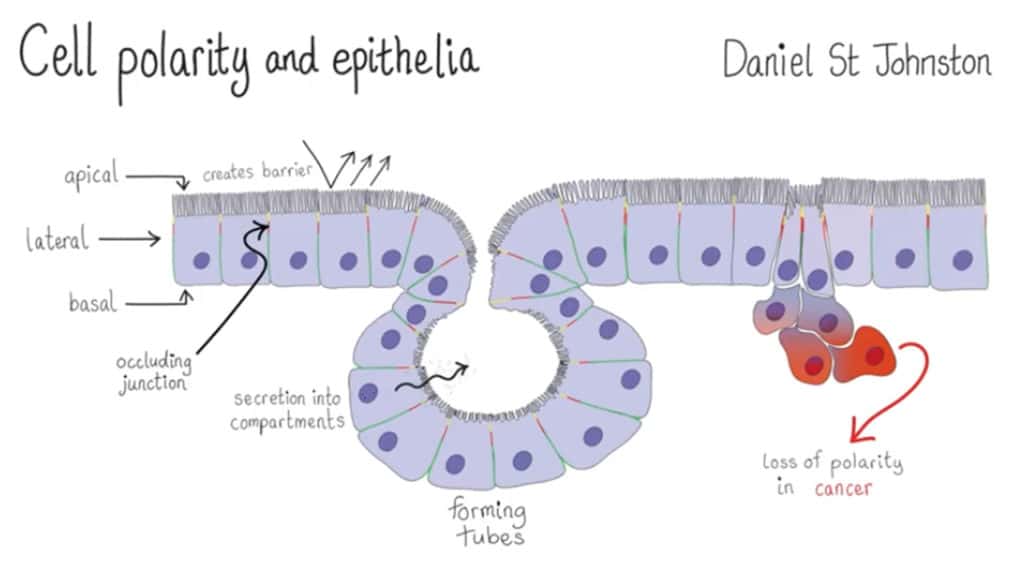
Nature Communications, May 2013  In all eukaryotes, cell polarity is controlled by polarity factors that populate large domains of the cell cortex - such as apical, basal or growth domains. How polarity factors are organized within those domains is however mostly unknown. Using state-of-the art microscopy, genetics, computational and modelling techniques, researchers in the Carazo Salas Lab discovered that in the cortex of yeast cells polarity factors are organized in distinct clusters 50-100 nanometres in size, with different factors segregated in different cluster populations. The group further showed that in the case of the polarity factors Tea1 and Tea3, their association or segregation into separate clusters is modulated through the cell cycle and this is required for proper reactivation of polarized growth after mitosis. Thus, clustered segregation of polarity factors provides a means to spatio-temporally regulate polarity, revealing a new fundamental layer of cell polarity control. More...


Cell Reports, February 2013  Asymmetric Localization of Cdx2 mRNA during the First Cell Fate Decision in Early Mouse Development: A longstanding question in mouse development is whether divisions that set apart pluripotent and differentiating cells are asymmetric in cell-fate instructions. Cdx2 is a key factor in this first fate decision. The Zernicka-Goetz Lab has now shown that localization and inheritance of Cdx2 transcripts become asymmetric as pluripotent and differentiating lineages segregate. They demonstrate that asymmetric transcript localization requires cell polarization as well as intact microtubule and actin cytoskeletons, and that mislocalization of Cdx2 transcripts significantly decreases the number of pluripotent cells. More...


Science, December 2012 Primordial germ cells (PGCs) undergo unprecedented epigenetic reprogramming, including global DNA demethylation and imprint erasure, which is a key process towards acquiring totipotency. Researchers in the Surani Lab have now shown that the erasure of DNA methylation in PGCs occurs through conversion of 5-methylcytosine (5mC) to 5-hydroxymethylcytosine (5hmC) by TET1 and TET2. 5hmC is subsequently lost largely through replication-coupled dilution, which leads to a remarkably hypomethylated epigenome. However, some rare loci escape methylation erasure, which could potentially provide insights into transgenerational epigenetic inheritance. Unravelling the mechanistic basis of DNA demethylation may contribute to our ability to manipulate cell fates for therapeutic purposes. More...


Epigenetics and Chromatin, October 2012 Nuclear reprogramming is potentially important as a route to cell replacement and drug discovery, but little is known about its mechanism. Nuclear transfer to eggs and oocytes attempts to identify the mechanism of this direct route towards reprogramming by natural components. In this study, scientists in the Gurdon Group have demonstrated that the incorporation of histone H3.3 is an early and necessary step in the direct reprogramming of somatic cell nuclei by oocyte. It suggests that the incorporation of histone H3.3 is necessary during global changes in transcription that accompany changes in cell fate. More...


Cell, October 2012  MicroRNAs (miRNAs) regulate key biological processes and their aberrant expression may lead to cancer. The primary transcript of canonical miRNAs is sequentially cleaved by the RNase III enzymes, Drosha and Dicer, which generate 5' monophosphate ends that are important for subsequent miRNA functions. In particular, the recognition of the 5? monophosphate of pre-miRNAs by Dicer is important for precise and effective biogenesis of miRNAs. In this study the Kouzarides Group has identified a RNA-methyltransferase, BCDIN3D, that O-methylates this 5' monophosphate and negatively regulates miRNA maturation. Specifically, we show that BCDIN3D phospho-dimethylates pre-miR-145 both in vitro and in vivo and that phospho-dimethylated pre-miR-145 displays reduced processing by Dicer in vitro. Consistently, BCDIN3D depletion leads to lower pre-miR-145 and concomitantly increased mature miR-145 levels in breast cancer cells, which suppresses their tumorigenic phenotypes. Together, our results uncover a miRNA methylation pathway potentially involved in cancer that antagonizes the Dicer-dependent processing of miR-145 as well as other miRNAs. More...


About the Institute:
About the Institute
Travel directions
Contact details
Annual reports
Outreach
Vacancies
Twitter
LinkedIn
Facebook

Events:
Symposium photos
Institute Calendar

Staff shortcuts:
Imaging
Bioinformatics
Postdoc Association
Email everyone
University forum
Hermes webmail
Mole webmail
Energy/environment
Leaving the Institute

ALUMNI!!: If you have any news, if you've changed jobs or contact details, please CLICK HERE to let us know!


University of Cambridge logo

Cancer Research UK logo

Wellcome Trust logo

Privacy: Some pages on this website use cookies to gather some data about visitors. Please see our Privacy Statement for more information.

Environment: The Institute is committed to energy efficiency and conservation, and makes every effort to save energy and to recycle. Please support us in this important aspect of life here by turning off unnecessary equipment and recycling all waste wherever possible.

Green Apple Award